

 Britania Williams
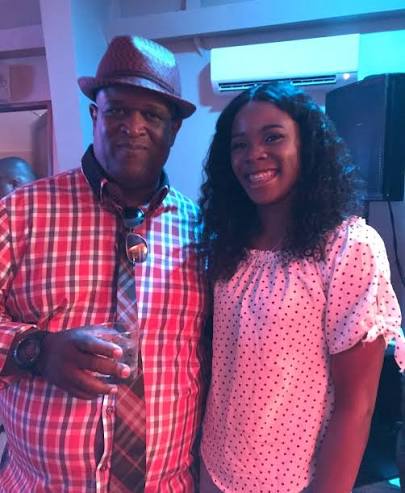
Everyone leaves this world at some point. But there are some whose work becomes so deeply woven into the fabric of a nation that their absence is felt for generations. Stephen Francis, affectionately known to so many as “Franno,” was one of those people.
Last Saturday, August 15, Jamaica gathered at the National Indoor Sports Centre to celebrate the life and legacy of one of the greatest coaching minds the world of track and field has ever known. The occasion was more than a farewell to a coach. It was a national acknowledgement of a man who fundamentally changed the trajectory of Jamaican athletics.
Vincent Stephen “Franno” Francis died on July 4, 2026, one day after celebrating his 64th birthday. His passing not only shocked the Jamaican public, but it devastated the athletics community. Although reports had emerged that he was receiving medical treatment, many Jamaicans were unaware of the seriousness of his condition. Therefore, it felt sudden, leaving athletes, coaches, administrators, friends and fans struggling to comprehend that one of the most influential figures in modern Jamaican athletics was gone.
But perhaps the greatest testimony to Franno’s life was not found in the speeches, newspaper headlines or official tributes.
It was found in the people who came to honour him.
The athletes he coached. The coaches he mentored. The administrators who worked alongside him. The people whose lives he touched. The champions whose careers he helped build.
They came because Franno mattered.
And Jamaica needs to understand just how much he mattered.
A Coach Who Changed Jamaican Athletics
Stephen Francis was unquestionably a great coach. But calling him that almost feels inadequate.
He was an architect.
He was an innovator.
He was a teacher.
He was a talent developer.
He was a strategist.
And, perhaps most importantly, he was a believer in Jamaican talent.
Francis was instrumental in changing the belief that Jamaican athletes had to leave Jamaica to become world-class. Alongside his brother Paul Francis, Bruce James and David Noel, he co-founded the MVP Track & Field Club in 1999. The philosophy behind MVP was revolutionary. Jamaican athletes could be developed by Jamaican coaches, supported by Jamaican management and trained on Jamaican soil, and still become the best in the world.
That philosophy became reality.
MVP did not simply produce athletes.
It produced champions.
It produced Olympic champions.
It produced World Champions.
It produced world-record holders.
And it helped transform Jamaica into the sprinting powerhouse that the world knows today.
Francis had an extraordinary ability to identify athletes whose potential was not always immediately obvious and develop them into global superstars. As the Jamaica Gleaner noted, he had a particular talent for finding the “diamonds in the rough.”
That ability may ultimately be one of his greatest contributions to sport.
He saw what others did not see.
Look at the Names
Consider the list of athletes who passed through Franno’s hands.
Shelly-Ann Fraser-Pryce.
Elaine Thompson-Herah.
Asafa Powell.
Shericka Jackson.
Tajay Gayle.
Michael Frater.
Nesta Carter.
Melaine Walker.
Sherone Simpson.
Kaliese Spencer.
Brigitte Foster-Hylton.
Stephanie-Ann McPherson.
Christine Day.
Janieve Russell.
Germaine Mason.
And a newer generation that includes athletes such as Kishane Thompson, Tina Clayton and Tia Clayton.
This is not simply a list of successful athletes.
This is a catalogue of Jamaican and global athletics history.
Asafa Powell
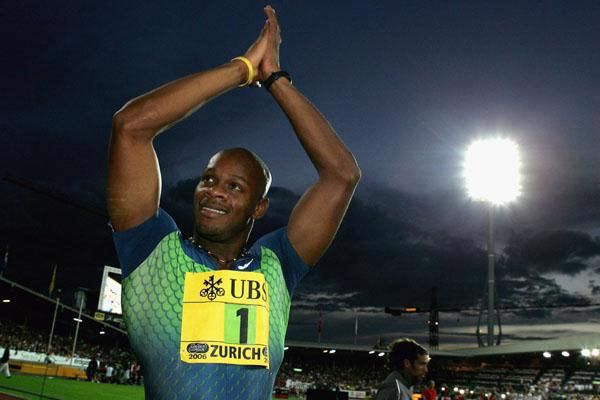
Usain Bolt became synonymous with Jamaican sprinting. But before he became the greatest to ever do it, Asafa Powell carried the hopes of an entire nation.
Under Francis, Powell went from a personal best of 10.81 seconds to becoming the first Jamaican man to hold the men’s 100m world record.
Not only did he set the record, but he broke it twice. He first ran 9.77 seconds, and then lowered it to 9.74 seconds.
Additionally, Franno did not merely coach a world-record holder.
He helped introduce Jamaica to a new era of sprinting dominance.
Shelly-Ann Fraser-Pryce
Then came a young athlete who would become one of the greatest sprinters in history.
Shelly-Ann Fraser-Pryce joined MVP while still developing as an athlete. She was somewhat unheralded when she turned pro. But under Francis, she became an Olympic champion, multiple-time World Champion and one of the most decorated female sprinters the sport has ever seen.
Her Olympic and World Championship success turned her into a global icon.
But behind the medals was a coach who helped identify, develop and refine the talent that was already within her.
Elaine Thompson-Herah
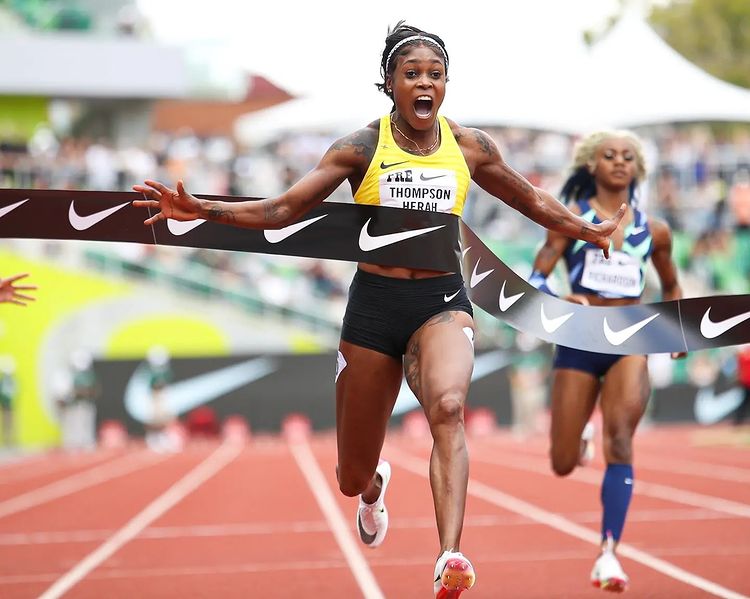
Elaine Thompson-Herah represents perhaps one of Franno’s greatest examples of developmental coaching.
Thompson-Herah joined MVP in 2011 as a relatively unknown athlete.
But five years later, she left her mark on Olympic history.
At Rio 2016, Thompson-Herah won both the 100m and 200m Olympic titles.
Five years later, at Tokyo 2020, she repeated the feat.
She became the first woman in history to win consecutive Olympic titles in both the 100m and 200m — the extraordinary “double-double.”
That is not simply athletic excellence.
It’s history.
And Franno was part of the journey that made it possible.
Brigitte Foster-Hylton
We must also remember Brigitte Foster-Hylton, who has described Francis as a visionary coach, exceptional mentor and one of the greatest architects of excellence in Jamaican sport.
She was particularly significant because she was Francis’s first professional athlete, taking a chance on a coach who had not yet established the international reputation that would later become synonymous with his name.
Foster-Hylton would go on to become the 2009 World Champion in the 100m hurdles.
That relationship represented the beginning of something extraordinary.
The Numbers Tell Only Part of the Story
It would be easy to measure Franno’s legacy through medals.
Olympic medals.
World Championship medals.
Commonwealth medals.
World records.
National records.
Diamond League victories.
But numbers cannot fully measure his contribution.
His greatest achievement may have been changing the psychology of Jamaican athletics.
He helped prove that Jamaica did not have to depend on foreign systems to produce world-class athletes.
He helped create an environment where Jamaican coaches could become world-class coaches.
He demonstrated that science, analytics, technical preparation, disciplined training and talent identification could coexist with the raw athletic ability for which Jamaica is famous.
Francis had a background in mathematics, analytical sciences, management and finance. He earned a Bachelor of Science in Management Studies from The University of the West Indies and an MBA in Finance from the University of Michigan. He could have pursued a lucrative career in finance — and, in fact, had attracted the attention of Wall Street firms — but he ultimately chose athletics.
That decision changed Jamaican sport forever.
He Was Not Afraid to Be Different
Franno was famously uncompromising.
He was outspoken and challenged administrators, athletes, coaches and the systems he believed were holding Jamaican athletics back. Francis was not always easy to understand or to work with.
But greatness is not always comfortable.
Francis demanded excellence because he believed Jamaican athletes were capable of excellence.
His philosophy was captured by the phrase:
“Do it well, or not at all.”
That philosophy became more than a personal motto.
It became a standard.
The Coach Behind the Coach
One of the most important aspects of Franno’s legacy is something that cannot be measured by a stopwatch.
Knowledge.
Francis knew things.
He understood athletes, training, preparation, competition and talent identification.
Franno also understood the transition from junior athletics to elite senior competition.
He recognised the importance of data and technical analysis.
And he understood something that many people overlook:
an athlete is not simply a body that runs, jumps or throws.
An athlete is a human being who must be developed physically, technically, mentally and strategically.
That knowledge should never have been allowed to disappear with him.
And this is where I believe Jamaica failed Franno — not in celebrating him after his death, but in failing to sufficiently preserve his knowledge while he was alive.
We Should Have Started Preserving His Knowledge Years Ago
I strongly believe that the Jamaica Athletics Administrative Association, the Ministry responsible for Sport, our universities, colleges and sporting institutions should have been working with Stephen Francis for years to systematically document his knowledge.
Not after his death.
While he was alive.
Beginning years ago, Jamaica should have created a national Stephen Francis Coaching Knowledge Project.
Franno should have been sitting in classrooms at UTech, UWI and other institutions lecturing future coaches.
He should have been conducting coaching clinics, recording seminars.
Furthermore, Francis should have been teaching courses on sprint mechanics, athlete development, talent identification, training methodology, competition preparation, performance analysis, injury prevention, athlete management and the transition from junior to senior athletics.
Francis’ coaching philosophy, training methodology and approach to individual athletes should have been documented. His understanding of Jamaican sprinting, successes and failures should have been recorded.
Because there will never be another Stephen Francis.
We Should Have Had His Books
I personally believe Franno should have published books.
Not one.
Not two.
Ten. Fifteen. Twenty, if necessary.
There should have been books about his coaching philosophy. Books should exist about how Franno developed and transformed Powell, Fraser-Pryce, Thompson-Herah and his other legendary students. Other literature on his talent identification, sprint mechanics, training methodology, Olympic preparation, building MVP, Jamaican athletics and the psychology of coaching. He also could have shared secrets about athlete development from high school to the professional level in print, as well as data and analytics in sprinting.
Plus, most importantly, a book about what he learned from decades of coaching Jamaican athletes.
Those books could have become essential resources for Jamaican coaches and sports scientists.
We Should Have Had a Franno Digital Archive
Imagine if Jamaica had created a digital archive containing hundreds of hours of Franno’s lectures, interviews, training discussions and coaching sessions.
What if there was a YouTube channel dedicated to his coaching philosophy?
Think of young coaches anywhere in Jamaica being able to watch Franno explain sprint mechanics.
Coaches in rural Jamaica should able to access a masterclass by one of the greatest coaches in the history of athletics.
Universities could use his lectures as teaching material. Future generations should have the opportunity to study his methods.
That is the legacy project Jamaica should have been building.
And it is still not too late.
Document the Athletes He Built
I also believe that one of the greatest projects MVP, JAAA, the Ministry of Sport and Jamaica’s universities could undertake now is the creation of a comprehensive Stephen Francis Athlete Archive.
For every major athlete he coached, there should be a detailed coaching profile.
Take Asafa Powell.
Document where he was when Franno began working with him.
Then look at his weaknesses, strengths, training progression, biomechanics, times, injuries, competition preparation and adjustments made throughout his career.
Do the same for Fraser-Pryce, Thompson-Herah, Foster-Hylton, Melaine Walker, Shericka Jackson, Tajay Gayle, Michael Frater and Sherone Simpson, and the many others.
These profiles would create an extraordinary historical record of how Jamaica developed some of the greatest athletes the world has ever seen.
Franno Should Have Been a National Coaching Institution
Stephen Francis should not simply be remembered as the man who coached champions.
He should be remembered as a teacher of coaches.
His knowledge should be institutionalised.
Jamaica could establish:
The Stephen Francis National Coaching Lecture
An annual lecture delivered by a leading Jamaican or international coach.
The Stephen Francis Coaching Fellowship
A programme that sends promising Jamaican coaches to study elite coaching systems around the world while requiring them to return and train other coaches.
The Stephen Francis Coaching Institute
A specialised programme focusing on athletics science, coaching, talent identification, biomechanics, sports psychology, performance analytics and athlete development.
The Stephen Francis Digital Archive
A permanent repository of his interviews, lectures, coaching philosophies, photographs, training programmes and historical material.
The Stephen Francis Athlete Development Programme
A national programme focused on identifying and developing young Jamaican talent before they reach elite competition.
That would be a fitting tribute.
More than a plaque, statue or ceremony.
A living institution.
His Greatest Legacy Is MVP
Despite everything, perhaps Franno’s greatest monument already exists.
It is called MVP Track & Field Club.
MVP was an audacious idea that became one of the most respected athletic institutions worldwide.
Francis, his brother Paul, Bruce James and David Noel created something that outlived individual athletes and competitions.
And today, MVP remains in capable hands.
That matters.
Because the best way to honour Franno is not to allow his work to end with him.
It is to continue it.
A Man Loved by His Athletes
The outpouring of grief following his death demonstrated something that statistics never could.
Franno was loved, respected and remembered.
Athletes who had worked with him came forward to honour him. Some of the greatest names in Jamaican athletics spoke about the impact he had on their lives and careers.
Thompson-Herah called him “the greatest to ever do it.”
Fraser-Pryce described the loss as that of a visionary and mentor whose influence went beyond the track.
Foster-Hylton spoke of his extraordinary impact on her life.
These statements matter because athletes do not have to remember a coach after the medals are won.
They choose to.
And when generations of athletes continue to speak about one person with admiration, gratitude and emotion, that tells us something about the human being behind the achievements.
Jamaica Owes Him a Great Debt
In 2017, Stephen Francis received the Order of Jamaica, the country’s fourth-highest national honour, for his outstanding contribution to track and field through coaching and his work in developing MVP.
The University of Technology, Jamaica also honoured him with an honorary degree for his national and international contribution through sport and mentorship. Additionally, a government scholarship will bear his name, further recognising his vast contributions.
But perhaps the greatest honour is one that the government can’t award.
It is the dignity of being remembered.
And Jamaica will not only remember Franno, but the traits that made him special: the intensity, intelligence and unconventional methods. Francis’ many proteges, the medals they won, the records they broke and the institution that fashioned them, MVP Track Club.
We will remember the man who believed that Jamaican athletes could be the best in the world — and then helped prove it.
To Paul Francis and the Francis Family
To his brother Paul, who shared the vision of MVP with him from the beginning, my deepest condolences.
The loss of a brother cannot be measured through medals, headlines or tributes.
Paul knew Franno in a way that the rest of Jamaica never could.
He knew the brother, the friend, the family member and the person behind the public figure.
And I hope that in the days, months and years ahead, Paul and the entire Francis family will be surrounded by the same love and support that Jamaica has shown for Franno.
I hope they know that his life and work mattered. And I hope they understand that the world will forever be different because Stephen Francis passed through it.
Rest Well, Franno
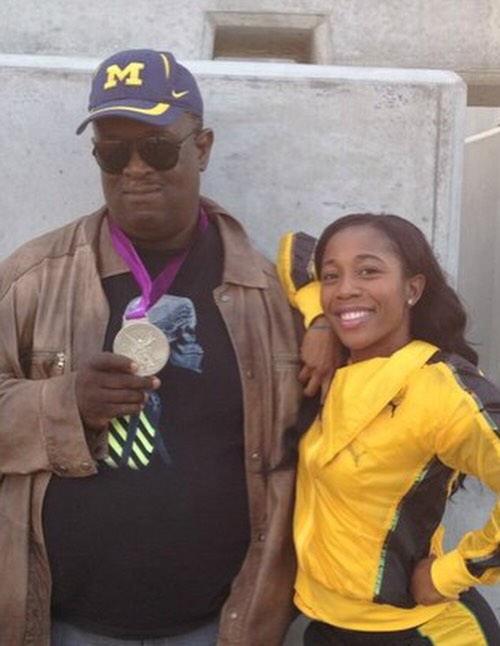
Stephen “Franno” Francis was not perfect.
No great person is.
But he was extraordinary.
Francis was bold enough to challenge conventional wisdom.
He had the brilliance to create something different.
Possessed the necessary discipline to demand excellence.
He had the ambitious and clear vision to believe in Jamaican coaches and athletes.
And Franno had the relentless determination to turn that belief into reality.
He helped Jamaica become a global sprinting superpower, create champions, set records, and capitalise on opportunities.
Francis changed the lives of countless athletes.
And he left behind an institution that can continue his work.
Other coaches, champions, and records and generations of Jamaican athletes will emerge.
But there will never be another Stephen “Franno” Francis.
Perhaps that is why his passing hurts so much.
Because Jamaica did not simply lose a coach.
We lost one of the architects of modern Jamaican athletics.
And while we mourn him, we must also protect what he gave us.
Document his knowledge.
Teach his methods.
Preserve his philosophy.
Study his work.
Build institutions in his name.
Train the next generation of coaches.
And ensure that the brilliance of Stephen Francis does not become a collection of memories that fades with time.
Let Franno’s greatest legacy be not simply that he created champions, but that he taught Jamaica how to create champions.
Rest well, Franno.
Thank you for believing in Jamaican athletes.
Thank you for challenging us.
Thank you for demanding excellence.
Thank you for changing our sport.
And thank you for leaving Jamaica better than you found it.
There will never be another person like you.
May your soul rest in peace.




GIPHY App Key not set. Please check settings